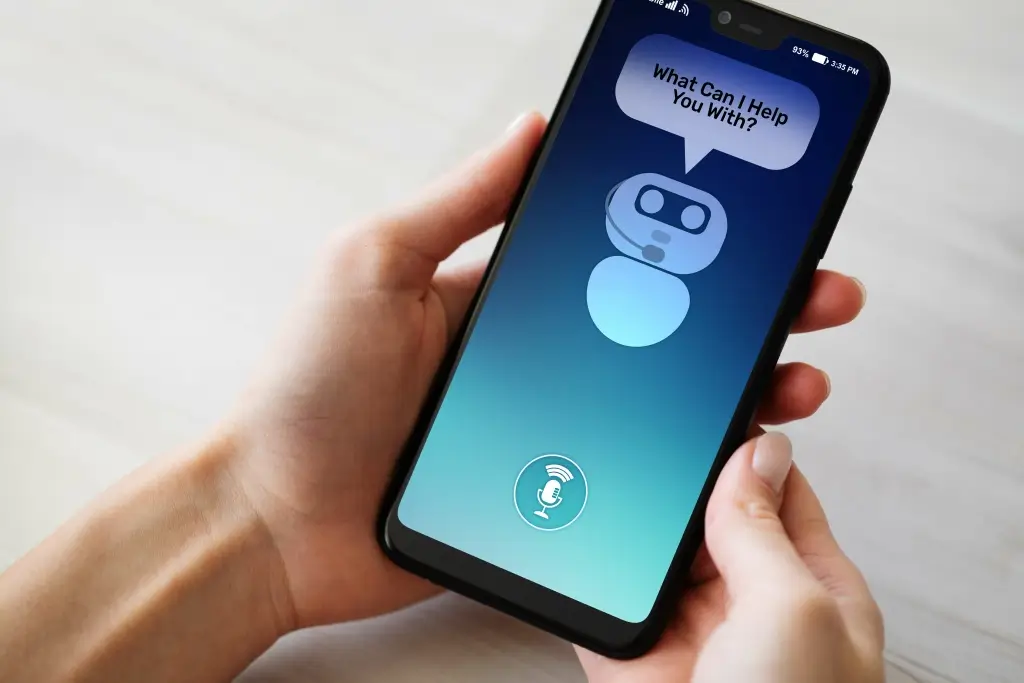
AI Customer Service: How Chatbots Are Changing the Game

Chatbots and AI: the future of customer service

AI Customer Service: the future with chatbots

Arguably the first vertical permeated by the era of digital transformation, customer service has evolved significantly over the past decade. A chatbot is a software application trained to provide instantaneous online assistance using customer service data, machine learning (ML), and natural language processing (NLP). These chatbots often answer simple, frequently asked questions or direct users to self-service resources like help center articles or videos. Chatbots are transforming customer service by reducing response times, handling routine inquiries, and offering 24/7 availability.

Chatbots will be specialized further to the particular fields of activity, grasping industry jargon and responding to questions based on every sector. Consequently, this industrial specialization will ensure that the accuracy levels and relevance of the client’s interaction with the firm are improved. Insurers resort to using chatbots to help customers with policy inquiries, getting quotes, and claims initiation. Most e-commerce sites have chatbots for online buyers to buy or to inquire about their products and services. Many banks use AI chatbots as virtual financial assistants to check account balances, move money and explain transactions. For instance, chatbots readily fit into already existing systems such as CRM software thereby enhancing the overall operations of the business.

How effective are chatbots for customer service?

For businesses with heavy call flow, chatbots provide another mode of communication to alleviate high call volume. It is difficult to miss the exact correspondence between what customers expect and what chatbots are able to deliver. It’s true that Gen Zers spend more time online, on social media, and their messaging apps. So, the two most important things turn out to be getting an instant reply at any time of the day and accurate recognition of customer problems.

AI Customer Service: the future with chatbots

AI chatbots are computer programs designed to simulate human-like conversations with users, usually through text-based interactions. They can answer questions, provide information, and even perform tasks on behalf of the users. The customer service landscape is undergoing a seismic shift, driven by the relentless advancement of Artificial Intelligence (AI). In an era where customer experience reigns supreme, businesses are harnessing the power of AI to redefine the way they engage with their clientele. Looking ahead, the future of AI in customer service holds exciting prospects and innovations. It’s not just the era of digital transformation that’s powering the adoption of virtual assistants and chatbots in customer service—it’s the impacts of the COVID-19 crisis.

Reduce costs and scale support

In fact, respondents in our State of AI report showed resounding trust in AI’s ability to offer more personalized messages (50%) and experiences (46%). Furthermore, the concept of hyper-personalization, driven by AI algorithms, will continue to evolve, delivering highly tailored customer experiences based on individual preferences, behaviors, and context. AI-driven solutions analyze vast amounts of customer data to predict behavior, anticipate needs, and offer tailored recommendations. Virtual assistants not only assist in handling customer queries but also perform tasks, manage schedules, and execute commands through voice or text inputs. Their integration with smart devices has facilitated the emergence of smart homes, where users can control appliances, access information, and make purchases simply through voice commands. Wouldn’t it be great if you could simply instruct your personal assistant to clear your calendar for the afternoon and call a cab in 30 minutes to take you to the airport?

However, it is worth remembering that AI is not a replacement for human customer service reps – rather, it is a tool that can enhance the customer journey. By combining AI with human expertise, companies can create exceptional customer experiences that drive loyalty and improve the bottom line. From self-driving cars to virtual assistants, AI has made inroads across various industries, including customer service.

The Future of Customer Service: AI-Driven Trends

Read more about AI Customer future with chatbots here.

AI Customer Service: the future with chatbots

What is a key differentiator of conversational AI? Here is what we learned by Muan Technologies

What is a Key Differentiator of Conversational AI? Freshchat Blog

Key Differentiator of Conversational AI

With our no-code bot builder, you can integrate your chatbot with your live chat software within minutes. It not only deflects but detects intent and offers a delightful support experience. They do not have working hours and are available round the clock to offer instant resolution to customers. If a customer reaches out with a complex issue after your business hour, these chatbots can collect customer information and pass it on to the agent. Conversational AI bots can handle common queries leaving your agents with only the complex ones. This saves your agent’s time from spending on basic queries and lets them focus on the more complex issues at hand.

Key Differentiator of Conversational AI

NLP enables the AI to understand and interpret human language, while machine learning algorithms help it learn and improve its responses over time. These systems analyze the input they receive, process it, and generate appropriate, contextually relevant responses to engage in conversation with users. AI-powered VR, MR, and AR solutions enable businesses to create immersive, interactive, and highly personalized customer interactions. From virtual product demonstrations to guided troubleshooting, customers can experience products and services in a whole new way.

Elevate Your Customer Experience with AI-powered chatbots! 🤖

This can reduce response times, improve efficiency, and improve customer satisfaction by promptly resolving queries and issues. Conversational AI is a relatively new technology that is powered by artificial intelligence and can simulate human-like conversations. The key difference between conversational AI and traditional chatbots is that conversational AI uses NLP and ML to understand the intent and respond to users. This makes conversational AI much more powerful and accurate than traditional chatbots.

As we look to the future, continued research and development will undoubtedly unlock new possibilities, further cementing conversational AI as a transformative force in our daily lives. Consumers are getting less patient and expect more from their interactions with your brand. You don’t want to be left behind, so start building your conversational AI roadmap today.

Subscription box customer experiences

The average waiting time when someone contacts a business is 8 hours before the customer gets an answer. The last step is to ensure the AI program’s answers align with the customer’s questions. NLU is a technology that assists computers in comprehending the meaning behind people’s questions or statements.

  • By comprehending context and adapting to users’ needs, Conversational AI stands out.
  • 38% of these respondents said that the chatbots are time-consuming to manage and they do not self-learn.
  • In customer service and support, conversational AI chatbots can handle customer inquiries, provide accurate information, and offer timely assistance, improving response times and customer satisfaction.
  • Conversational AI plays a huge role in proactive customer engagement and can help a brand with all its customer support needs.

Integrating an AI-powered omnichannel chatbot can help connect all these channels. This will significantly enhance your brand presence on all digital media and enable large-scale data synchronization. The conversational AI system maintains consistent behavior and responses across different channels with omnichannel integration. The context of ongoing conversations, user preferences, and previous interactions is shared seamlessly, allowing users to switch between channels. As artificial intelligence advances, more and more companies are adopting AI-based technologies in their operations.

When conversational artificial intelligence (AI) is implemented properly, it can recognize a user’s text and/or speech, understand their intent and react in a way that imitates human conversation. Yellow.ai’s AI-powered chatbots and virtual assistants can handle customer queries and support remotely, providing round-the-clock assistance. They can efficiently address common inquiries, resolve issues, and guide customers through various processes, reducing the need for human intervention. AI is currently playing an increasingly vital role in transforming customer services, and Generative AI solutions stand at the forefront of this technological revolution. They are powered with artificial intelligence and can simulate human-like conversations to provide the most relevant answers. Unlike traditional chatbots, which operate on a pre-defined workflow, conversational AI chatbots can transfer the chat to the right agent without letting the customers get stuck in a chatbot loop.

Key Differentiator of Conversational AI

That is the specialty of this sub-type of artificial intelligence—conversational artificial intelligence. Conversational AI has enabled computers and software applications to listen, comprehend, and respond like humans. Try using Microsoft’s Cortana, Apple’s Siri, and Google’s Bard to understand what we’re saying. Or head over to OpenAI’s ChatGPT, the most recent and sensational conversational AI that knows it all (until 2021).

Step into the Future: How Conversational AI is Transforming Customer Engagement and Support

Responding to negative feedback quickly would eventually enhance the product’s brand standing. Conversational AI can help e-commerce enterprises ensure online shoppers can find the information they need. Additionally, conversational AI helps create personalized, convenient, and loyalty-building experiences. Natural language processing is another technology that fuels artificial intelligence. Conversational AI chatbots have a diverse range of use cases across different business functions, sectors, and even devices.

Read more about Key Differentiator of Conversational AI here.